 English
 Bulgarian
 Croatian
 Czech
Czech Danish
 Dutch
Dutch Finnish
 French
 German
 Greek
Greek Hungarian
 Italian
 Japanese
 Norwegian
 Polish
 Portuguese
 Romanian
 Slovak
 Slovenian
 Spanish
 Swedish
 Ukrainian
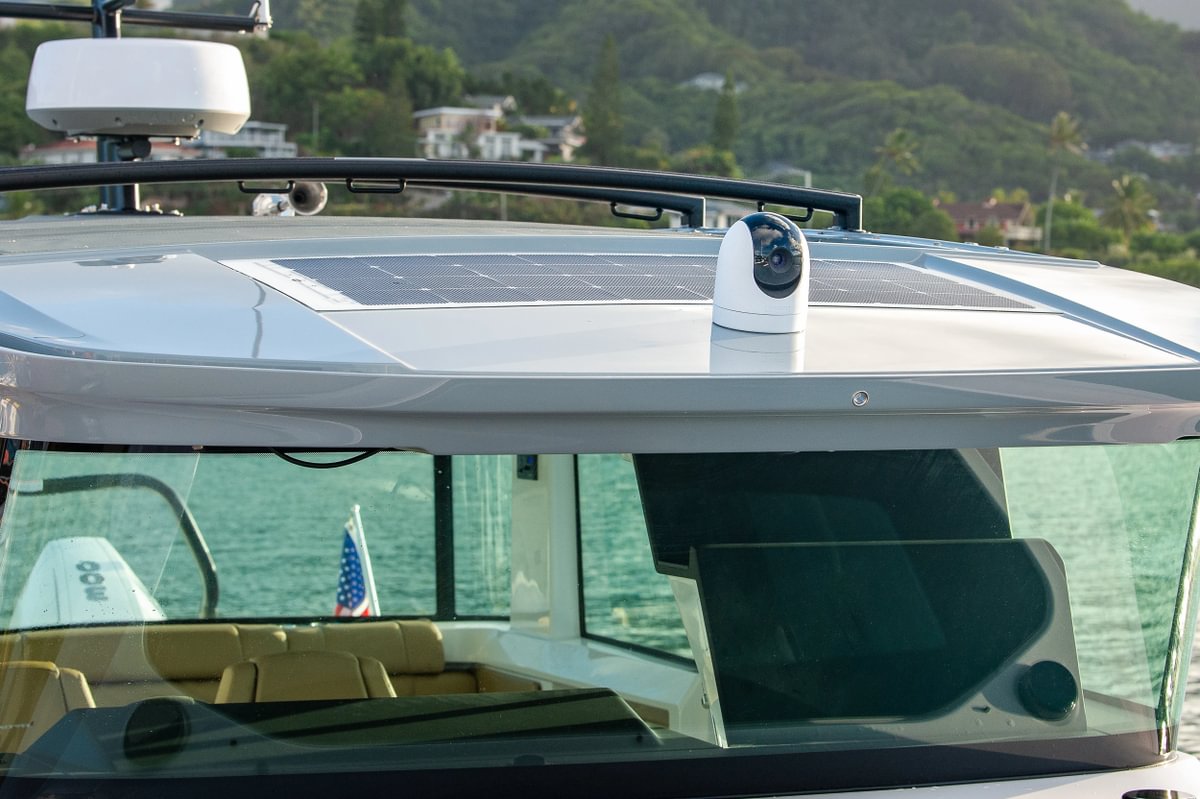
The Short Answer: The best way to mount a night vision device on a boat is to place it where it has a clear forward view, minimal vibration, outside of a radar beam, and does not see strong reflected light (e.g. from chrome rails). Proper mounting ensures reliable visibility in low-light conditions and even complete darkness, helping you identify hazards, navigate channels, and avoid other vessels.
Modern night vision technology from SIONYX combines advanced CMOS sensors with sensitivity to infrared light, giving boaters confidence to operate in conditions that overwhelm the naked eye. Whether you’re night hunting from a skiff, navigating offshore waters, or enjoying outdoor activities after sunset, choosing the right mounting system makes all the difference.
Choosing the Right Mounting Location
Mounting night vision on a boat isn’t a one-size-fits-all decision. The right placement depends on your vessel’s layout, how you navigate, and the conditions you expect to face. Test your Night vision camera in various locations before you drill holes. This allows the user to see field of view, any obstructions, the impact of radar operation, and problematic reflections, before committing to an installation location. These are the most effective mounting options to consider:
Bow Mounting (Forward View)
The bow provides the most unobstructed forward perspective for your night vision equipment. With a fully coated objective lens pointed straight ahead, you’ll detect channel markers, buoys, or floating debris earlier than with the naked eye. This forward position is ideal for maintaining depth perception in fast-moving or narrow waterways. Ensure you can still integrate your night vision with the helm before securing it.
-
Advantages: Clear forward view, early hazard detection, natural alignment with your line of travel.
-
Considerations: The bow is exposed to spray and impact, so a rugged, waterproof night vision device is essential. A low profile mount reduces stress and prevents interference with other gear.
Helm Mounting (Convenience & Control)
Mounting near the helm keeps your digital night vision unit looking at a similar perspective to you driving your boat. Operators can view high-quality video output directly alongside GPS, radar, and sonar for consolidated navigation. This option works well for solo operators, letting them manage brightness settings, record video to a memory card, or adjust digital zoom without leaving the console.
-
Advantages: Easy access to controls, simple integration with navigation electronics, reduced weather exposure.
-
Considerations: Field of view may be more limited compared to bow mounting. Reduce glare from cockpit lights for excellent optical clarity.
Elevated Mounting (Radar Arch or Hardtop)
An elevated position, such as a radar arch or hardtop, maximizes image quality by providing a field of view unaffected by location and reducing glare from deck lights. For offshore anglers, law enforcement patrols, or larger vessels, this option delivers high-performance visibility and better long-range detection.
-
Advantages: Wide horizon line, improved situational awareness, excellent for spotting distant vessels, wildlife observation, or shoreline features.
-
Considerations: Cable runs and waterproof sealing are more complex. Use marine-grade mounting hardware and test stability to protect against vibration.
Installation Best Practices
Mounting location is only part of the equation. The way you install your night vision device determines how well it performs under real conditions, especially in complete darkness or low-light environments.
Minimize Vibration & Movement
Boat vibration can distort images and shorten the life of sensitive electronics like an image intensifier tube or digital camera sensor.
-
Avoid areas prone to hull flex or heavy pounding.
-
Use marine-grade mounting systems with shock-absorbing features. (RAM mounting hardware is ideal for this!)
-
Reinforce mounts on thin surfaces to protect stability over time.
Manage Cabling & Power
Your night vision equipment needs a clean, reliable power supply.
-
Use waterproof connectors (IP67+) for external links.
-
Protect cables with conduit from saltwater spray and sharp edges.
-
A dedicated battery pack or circuit reduces interference from other devices.
-
Keep wiring runs short for maximum electrical signal integrity.
Integrating with Electronics
Night vision delivers maximum value when integrated with your other systems.
-
Connect your device to a multi-function display (MFD) for centralized viewing.
-
Test built-in IR illuminators or an external infrared flashlight for improved performance in total darkness.
-
Confirm your system supports features like recording video in p video resolution or streaming to external devices.
Note: Different SIONYX products may require physical connection to systems (cords) while other may allow for digital connection (Local Network).

Optimizing Performance on the Water
Even the best night vision equipment needs fine-tuning and maintenance to perform when it counts. Here’s how to get excellent optical clarity and reliable results.
Calibrate for Lighting Conditions
Settings should match the environment.
-
Adjust brightness settings and contrast depending on moonlight, starlight, or total darkness.
-
Reduce washout by minimizing reflection from deck or navigation lights.
-
Leverage IR light sensitivity or a built-in IR illuminator to reveal details invisible to the naked eye.
Test in Real Scenarios
Hands-on use is the best training.
-
Practice in calm waters before running long night passages.
-
Compare system performance across low-light conditions: starlight, coastal glow, and complete darkness.
-
Experiment with digital zoom and x magnification features to understand the trade-off between field of view and detail.
Maintenance & Reliability Checks

Saltwater and vibration demand regular attention.
-
GENTLY Rinse housings and fully coated objective lens surfaces with fresh water.
-
Inspect mounts and cables for corrosion.
-
Update firmware to maintain high performance and image quality.
-
Do not caulk the Nightwave Analog to the hardtop
Explore Night Vision Today
Mounting night vision on your boat comes down to three factors: location, installation, and performance. Whether mounted on the bow, helm, or radar arch, the right setup paired with proper installation practices and regular maintenance ensures high-quality visibility for navigation, night hunting, or outdoor adventure.
At SIONYX, we engineer night vision devices designed for real-world boating conditions in the United States and beyond. From the permanently mounted Nightwave Digital to the versatile Aurora Series night vision binoculars, our technology combines infrared light sensitivity, excellent optical clarity, and rugged construction for high performance in every environment. Ready to upgrade your situational awareness? Explore our lineup of digital night vision equipment and experience how SIONYX helps you see what others can’t.
Share:
Digital Night Vision vs Thermal Imaging: Which Technology is Right for You?
Boating at Night Requirements