 English
 Bulgarian
 Croatian
 Czech
Czech Danish
 Dutch
Dutch Finnish
 French
 German
 Greek
Greek Hungarian
 Italian
 Japanese
 Norwegian
 Polish
 Portuguese
 Romanian
 Slovak
 Slovenian
 Spanish
 Swedish
 Ukrainian
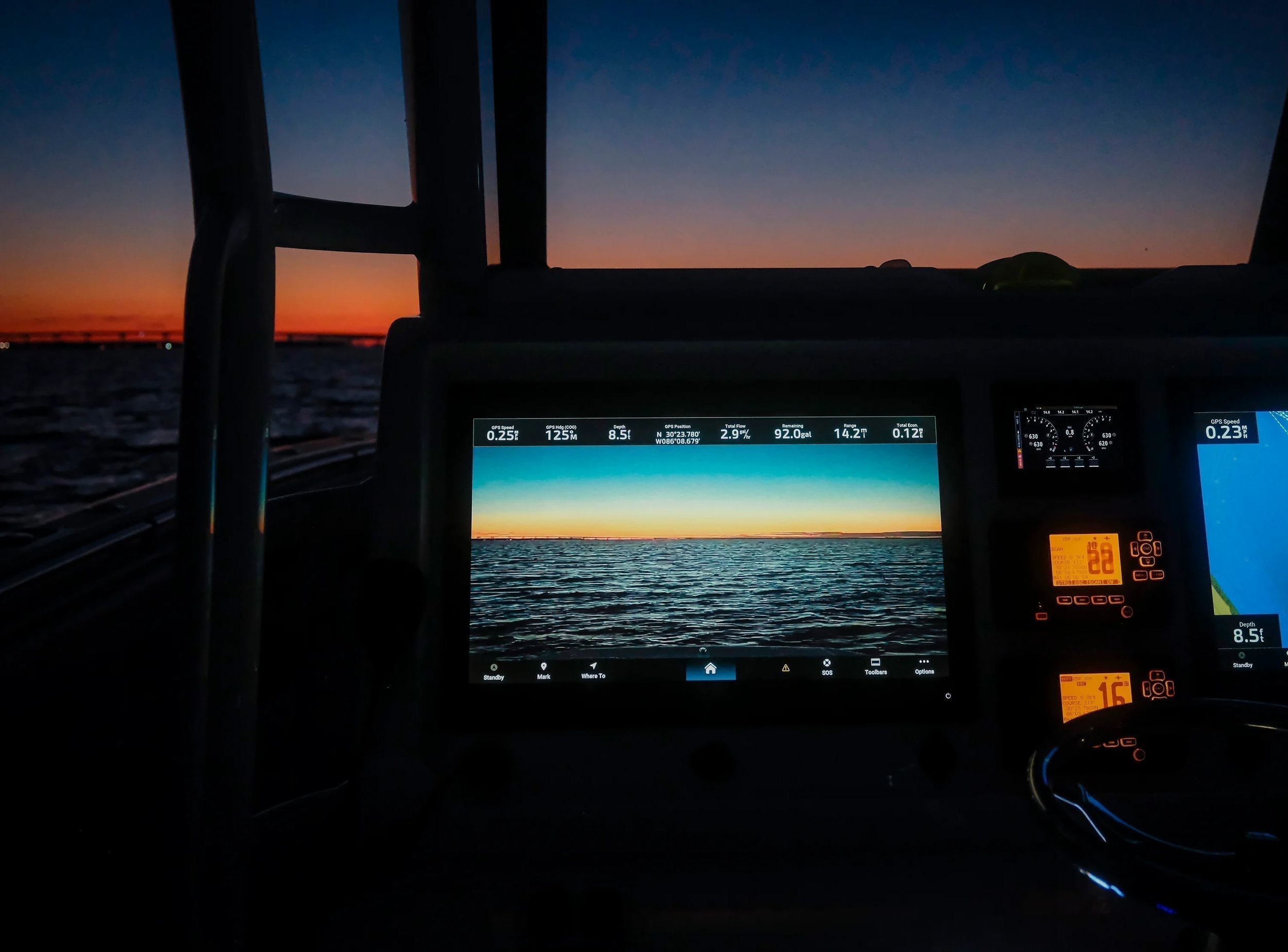
Seeing Clearly at Night: Why Marine Night Vision Is About More Than Just the Camera
Boating at night, from dusk to dawn, has always demanded confidence. Whether it’s navigating unfamiliar waters after sunset, a late-night return to the dock, or a pre-dawn departure, the challenge is the same: human vision reaches its limits long before your desire or the boat does.
Since the mid-2000’s, night-vision cameras have become more common on recreational boats. The initial release of the FLIR Mariner in 2006 has been followed by a steady lineup of variants based on technology originally derived from military and automotive use. Fast forward to today and night boating is becoming even more accessible with low-light sensors appearing in everything from your mobile phone to your front doorbell. Add in a variety of connection options for common marine displays and a lot has changed in 20 years.
So what’s next? What’s changing now isn’t just the hardware or the camera sensor — it’s how marine night vision works as a complete system at the helm.
Marine Night Vision Is More Than Sensor Sensitivity
A common misconception is that night-vision performance is determined solely by how sensitive a camera’s sensor is. As technology companies, we quickly lean towards specifications and jargon when describing night vision performance on our brochures and websites. But for anyone who was ‘born on the crest of a wave and rocked in the cradle of the deep’[1], real marine environments are far from stable development and testing labs. (Quick tip – want to know if a sensor is worth its salt, search up the hardware specs and you’ll quickly find its origin.) Performance depends on how the entire system works together in the current conditions: the lenses, sensor, image processing, software, and integration with onboard electronics must all come together to meet the demands of the sea.
Marine conditions are rarely stable. Saltwater spray, reflective surfaces, shoreline lighting, haze, and shifting backgrounds can all affect image quality. Simply amplifying brightness or reducing shadows often introduces noise, glare, and confusion rather than clarity.
What matters most is how effectively the system preserves usable contrast, manages bright light sources, and presents an image that feels natural and intuitive to interpret — especially as conditions change underway.
Why Modern Night Vision Needs to Behave Like a System
As boats have become more electronically integrated – there’s an entire Standard for it – onboard marine systems have evolved from isolated devices to an interconnected set of mechanical and electrical components all supplying data and status to the helm. Radar, GPS, AIS, engines, fuel, seakeeping, pumps, sonar, security sensors, and more all contribute different types of information that together support situational awareness and safety while underway and at the dock.
Night vision is no different.
Rather than acting as a static video feed, modern marine night vision must be adaptable — adjusting how images are processed based on lighting and surroundings, optimizing bandwidth and resolution to match the boat’s marine displays and importantly enabling the operator with a set of controls that meet their individual needs. When done well, the system works as expected to deliver intuitive video at the helm that reduces the need for factory or installer adjustment and allows the operator to focus on safe navigation, not settings.
This is what separates a night vision camera from a night-vision system.
Introducing NightIQ™: A Smarter Night Vision System
Nightwave Digital is powered by NightIQ™, SIONYX’s image-optimization technology designed to help boaters see more clearly at night in real-world marine environments.
NightIQ continuously optimizes how low-light video is processed and displayed, enhancing details and enabling operators to manage glare from bow rails, dock lights, shoreline lighting, and other vessels. Instead of requiring new tuning of the sensor, NightIQ allows operators to quickly adapt the camera display as conditions change, producing images that are easier to interpret and more consistent underway.
Features such as condition-based presets, image enhancement controls, and Bright Lights Region of Interest (ROI) are all part of the NightIQ system. Together, they help reduce complexity for installers and boaters alike, while improving confidence during nighttime operation.
Importantly, NightIQ is delivered through software. This allows Nightwave Digital to improve over time through software updates, without requiring new hardware or changes to installation.
Integration at the Helm Matters
A night-vision system is only useful if it works with the boat’s other systems and fits with how the boat is operated.
By integrating directly with common marine displays' native capabilities, Nightwave Digital allows video and camera controls to be accessed alongside charts, radar, and navigation data. This helps maintain a clean helm layout and supports natural decision-making, where visual confirmation works alongside modern navigation tools rather than competing with them.
When night vision behaves like a native part of the onboard system, it becomes easier to trust and easier to use responsibly.
Understanding What Night Vision Can — and Can’t — Do
Ultra-low-light night vision extends human vision - it can even 'see' light in the spectrum beyond the human range, but it doesn’t replace seamanship or other navigation tools.
All low-light cameras rely on reflected light. In true zero-light conditions, performance will be limited. Fog, heavy rain, and dense precipitation scatter visible light and reduce contrast, making radar the more effective primary tool. Field of view and range are finite, and no one camera shows everything around the vessel.
Night vision is most effective when used as part of a complete navigation system — supporting radar, charts, AIS, and good judgment rather than replacing them.
The Direction of Marine Night Vision
As vessels and their marine electronics continue to evolve, the value of night vision will increasingly be defined by how well the system adapts to real conditions, integrates with the vessels other systems, and reduces complexity for the operator.
By focusing on the system as a whole — not just the camera — Nightwave Digital and NightIQ reflect a practical approach to marine night vision: one designed for compatibility, consistency and performance in tough marine conditions when it matters most.
Clearer visibility. Less adjustment. More confidence after dark.
[1] Free SIONYX Hat to the first five who read this post, track me down at MIBS or FLIBS 2026 and recite the entirety of this saying.
Share:
NightIQ™ Software Platform for Nightwave Digital Delivers Advanced Night Vision for Boaters
SIONYX Nightwave Digital is Now Raymarine Compatible